Manduka PROlite Long vs eKO: Which One Should You Buy?
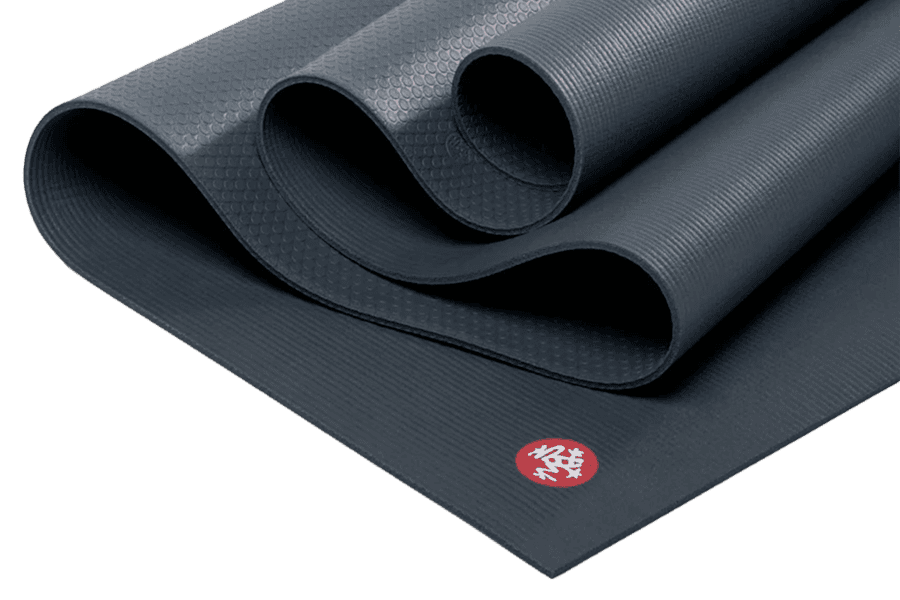
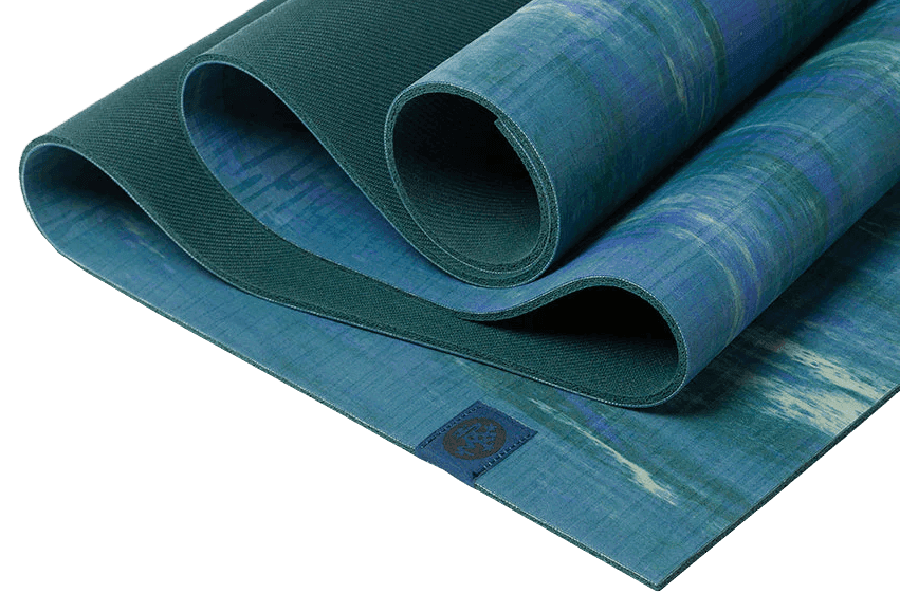
Ten dollars and two different shapes of mat. The PROlite Long is Manduka's PVC commuter stretched to 79", still just 5 pounds, guaranteed for life, slick until it breaks in. The eKO is Manduka's natural rubber mat in the standard 71" length but a wider 26", grippy from the first class, 7 pounds, no warranty. One is built long and light for durability; the other is built wide and grippy from renewable rubber. Sort out which dimensions you need, then which material you believe in.
As an Amazon Associate, we earn from qualifying purchases made through links on this page. How this works
The quick answer
The PROlite Long has the length (79" vs 71"), the weight advantage (5 pounds vs 7), the lifetime guarantee, and a surface that outlasts rubber by many years; it makes you sit through a few slick break-in weeks first. The eKO has the width (26" vs 24"), traction from the first practice, a warmer natural rubber feel, and over 30% recycled content, with a 30 day return window as its only coverage and sun-and-gentle-cleaner care rules.
Tall practitioners should take the PROlite Long without much debate; the eKO doesn't come in 79 inches, only its eKO Long sibling does, at this same $124. Average-height buyers wanting rubber's grip should look at that eKO or the standard one and accept the shorter lifespan knowingly.
Get the PROlite Long if...
- You need the 79" length; the eKO stops at 71"
- You carry your mat to class (5 pounds vs 7)
- You want the lifetime guarantee and decade lifespan
- You can wait out the break-in weeks
Get the eKO if...
- 71" covers you and you'd use the extra 2" of width
- You want real traction on day one, no break-in
- You prefer natural rubber over PVC
- You'd rather keep the $10 and the recycled content
Side by side
Price
The eKO lists for $10 less.
$124
List price · check price at Amazon
$114
List price · check price at Amazon
Thickness
The eKO is 6% thicker.
4.7 mm0.19″
5 mm0.2″
Weight
The PROlite Long is 2.2 lbs lighter.
4.8 lbs2.18 kg
7 lbs3.2 kg
Size
The PROlite Long is 8″ longer; the eKO is 2″ wider.
Same on both
- Made by Manduka
- Closed-cell surface (sweat can't soak in)
- Firm, supportive cushioning
- Lies flat without curling
Full specs
Dimensions
Materials & build
Buying
Long and lean vs short and wide
Manduka cut these two mats to different templates. The PROlite Long is 79″ × 24″: the light PVC formula stretched for tall practitioners, 5 pounds, $124, lifetime guarantee. The eKO is 71″ × 26″: natural rubber in the standard length but a wider cut, 7 pounds, $114, grippy from the box, warranted for 30 days of returns and nothing after.
Ten dollars apart, so the decision splits into a geometry question, which dimension your body is missing, and the material question every Manduka page eventually reaches: PVC that lasts or rubber that grips.
Geometry first: length or width
Over about six feet, the eKO’s 71″ leaves your head or heels off the mat and the PROlite Long’s 79″ doesn’t; that alone decides most tall readers. Under six feet, the eKO’s 26″ width is the more useful bonus: elbows stay on rubber in savasana, wide stances feel roomier, and the extra inches get used every practice instead of never.
Want both dimensions in rubber? Manduka’s eKO Long is 79″ × 26″ at this same $124 list price, in one color and 8 pounds, and it’s the mat tall rubber-first buyers should actually be comparing; our PROlite Long vs eKO Long page covers it.
Grip: rubber wins the first month
The eKO’s textured rubber holds from the first class, with the warm, slightly tacky feel that makes natural rubber mats immediately likable. The PROlite Long makes its usual bargain: slick out of the box, a few weeks of practice to break in, then years of very good and still improving dry grip. Manduka has retired its old salt-scrub advice; the official position now is that use alone resolves the slickness, and it does.
On sweat they tie at mediocre. Both are closed-cell, so moisture pools rather than absorbing, and Manduka itself frames the eKO’s grip as most reliable dry. Heated classes mean a towel on either; absorbent mats are a different aisle.
Cushioning and carry
The eKO’s 5 mm of rubber sits a hair thicker and springier than the PROlite Long’s firm 4.7 mm of PVC; both are stable, supportive, unplush surfaces. The carry is less even: 5 pounds in a slim 24″ roll against 7 pounds in a wider one. As a daily commuter the PROlite Long is the clearly easier companion; the eKO leans homebody, if less severely than its 8 pound Long sibling.
Durability: the guarantee line runs between them
Manduka’s lifetime guarantee covers the PRO series and stops there. The PROlite Long gets roughly a decade of regular use with one replacement, on the PVC that GearLab keeps finding in service five to twenty years on, with no care rules worth remembering.
The eKO gets the 30 day window. Natural rubber wears with hard use, owners report visible surface aging within a few years of daily practice, and sun exposure damages it outright, so it wants shade and gentle cleaners. Manduka warranties one of these materials for a decade and the other for a month; that gap is information, and at a $10 price difference it’s cheap information to act on.
The materials question
The eKO is the reason eco-minded buyers stay in Manduka’s catalog: tapped rubber, over 30% recycled content in the current Taiwan-made build, no PVC. The PROlite Long’s defense is the one Manduka always mounts, longevity plus OEKO-TEX Standard 100 certification; a decade-long mat generates less waste than a rotation of shorter-lived ones. Note the version history too: retailers sometimes label the current eKO as eKO 2.0, and older reviews may describe the previous generation.
Price and value
List prices are $124 for the PROlite Long and $114 for the eKO. Check current prices on the PROlite Long and the eKObefore deciding.
With ten dollars between them, per-year cost belongs to the Manduka: a guaranteed decade against rubber’s few-year cycle isn’t close. The eKO’s value lives in the day-to-day: grip without a waiting period, width you use every practice, and a material you may simply feel better about. Those are real returns; they just expire sooner.
Bottom line
Get the PROlite Long if you’re tall, if the mat commutes, or if you want the purchase to be final for a decade. It’s the more practical mat in three dimensions out of four, and the guarantee settles the rest.
Get the eKO if 71 inches covers you and rubber is the point: instant grip, a wider deck, renewable material, ten dollars saved. And if you were only here because you’re tall and wanted rubber, the answer is the eKO Long at the same price as the Manduka; that’s the comparison to go read next.
Manduka eKO
List price $114
Frequently Asked Questions
- Does the eKO come in a long size?
- Yes, and it's the more direct rival to the PROlite Long: the eKO Long is 79" × 26" at the same $124 list price, in Midnight only, weighing 8 pounds. Tall buyers set on rubber should compare that mat, not the standard eKO. Tall buyers open to either material are choosing between the eKO Long's day-one grip and the PROlite Long's guarantee at identical prices.
- Which grips better, the PROlite Long or the eKO?
- Out of the box, the eKO by a wide margin; its textured rubber holds from the first class while the PROlite Long is famously slick for its first few weeks until practice breaks it in. Broken in, the Manduka's dry grip is very good and keeps improving. Both are closed-cell surfaces, so neither absorbs sweat and heated classes want a towel on either.
- Why doesn't the eKO get Manduka's lifetime guarantee?
- The guarantee covers the PRO series only, and the coverage tracks the materials. The PROlite Long's dense PVC barely wears across a decade; the eKO's natural rubber softens and shows surface wear within a few years of hard practice, and sunlight damages it outright. The eKO's 30 day return window is all the paper it gets, which is worth weighing at a $10 price difference.
- How much does the width difference matter?
- The eKO's 26 inches over the PROlite Long's 24 is more noticeable than it sounds: elbows stay on the mat in savasana and wide stances feel less precarious. The trade runs the other way in the roll, where the wider, heavier eKO makes a bulkier carry. Width lovers with height needs should note the eKO Long offers both at 79" × 26".
- Is the current eKO the same mat older reviews describe?
- Not exactly. Manduka re-engineered the eKO line a few years back, and some retailers still label the current mat eKO 2.0. Today's version is made in Taiwan with over 30% recycled content. Older reviews may describe the previous generation, so check dates and details before leaning on one.
- Which is the more sustainable choice?
- By material, the eKO: tapped rubber is renewable, the current build uses over 30% recycled content, and it avoids PVC, which has no practical recycling path. The PROlite Long's counterargument is longevity, one mat per decade instead of one every few years, plus OEKO-TEX Standard 100 manufacturing certification. Both cases are fair; they count different costs.
Related comparisons
- Manduka PROlite Long vs Lululemon The Mat 5mm
- Manduka eKO vs Lululemon The (Big) Mat 5mm
- Lululemon The Mat 5mm vs Manduka eKO
- Manduka PROlite Long vs JadeYoga Harmony 2.0 68"
- Manduka PROlite Long vs Yoga Design Lab Infinity 5mm
- Manduka eKO vs Hugger Mugger Para Rubber 5mm
- JadeYoga Harmony 74" vs Manduka eKO
- Manduka PROlite Long vs b, halfmoon B Mat Everyday 4mm
- Manduka PROlite Long vs JadeYoga Harmony 74"