Jade Harmony 74" vs Jade Fusion 74": Which One Should You Buy?
This is about as clean a comparison as we get to write. Same brand, same factory, same open-cell natural rubber, same 74" × 24" cut, same 1 year warranty, same tree planted per mat sold. The only variables are thickness, weight, and $90. The Harmony 74 is 4.8 mm and 5.3 pounds at $109.95; the Fusion 74 is 8 mm and 8.8 pounds at $199.95. Your joints get the deciding vote.
As an Amazon Associate, we earn from qualifying purchases made through links on this page. How this works
The quick answer
Eight millimeters of open-cell rubber is genuinely transformative if your knees, hips, or forearms complain during practice. OutdoorGearLab gave the Fusion a perfect comfort score alongside best-in-class traction, and floor-heavy or therapeutic practices are where that shows. The cost is 3.5 extra pounds, a roll fat enough to fight most bags and straps, and drying time measured in days rather than overnight after a sweaty class.
If nothing hurts when you practice, the Harmony 74 is the better mat and $90 cheaper. Its firmness is an advantage in standing balances, it carries easily, and the grip is the same celebrated surface. Buy the Fusion for pain, not for luxury.
Get the Harmony 74" if...
- You practice pain-free and want a steady, firm surface
- Your mat commutes; 5.3 pounds and a slim roll manage that
- You'd rather keep $90 for classes, props, or a second mat
- You want five colorways instead of three
Get the Fusion 74" if...
- Kneeling, forearm, or long floor work hurts on a normal mat
- You practice on tile, concrete, or another unforgiving floor
- The mat lives at home and never needs carrying
- You want the most cushioning available in natural rubber
Side by side
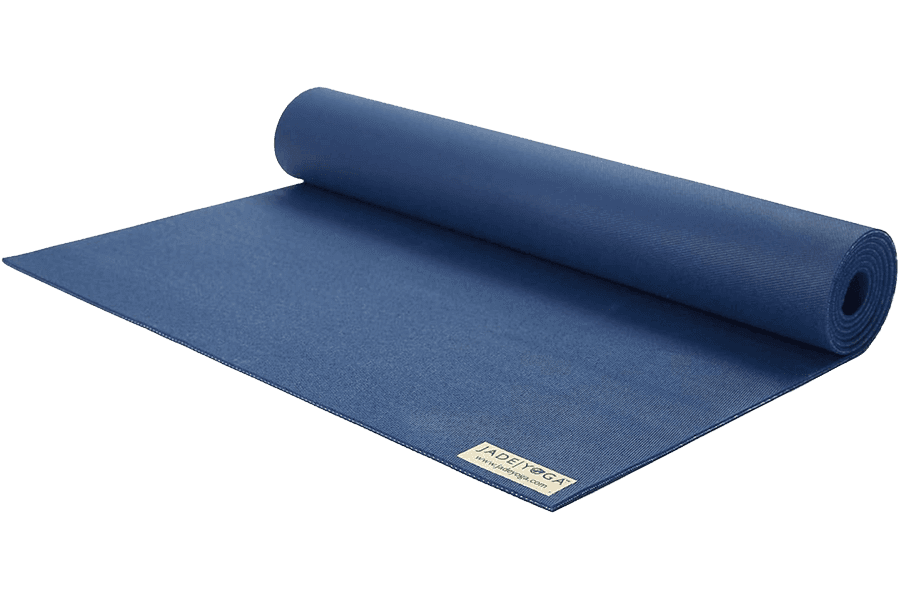
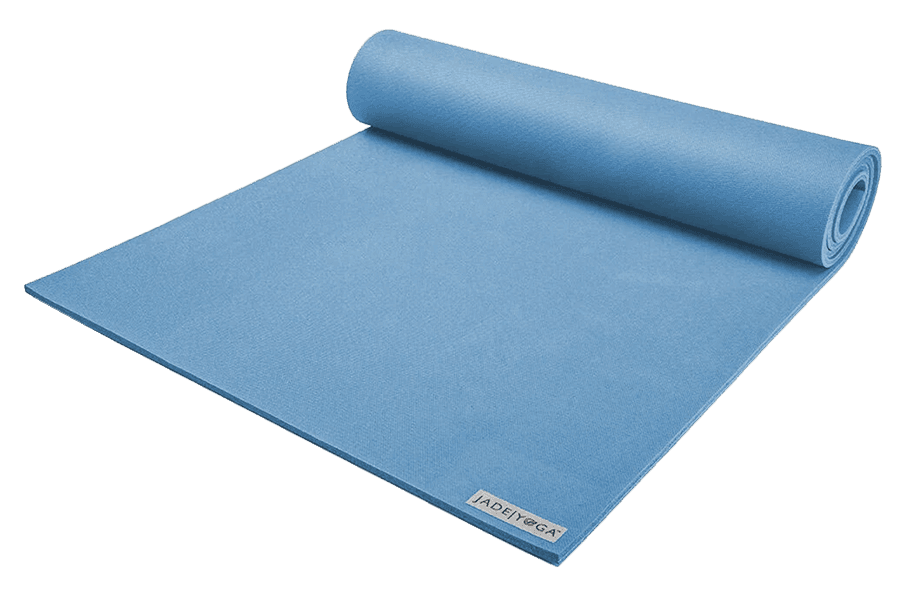
Price
The Harmony 74" lists for about $90 less.
$109.95
List price · check price at Amazon
$199.95
List price · check price at Amazon
Thickness
The Fusion 74" is 67% thicker.
4.8 mm0.19″
8 mm0.31″
Weight
The Harmony 74" is 3.5 lbs lighter.
5.3 lbs2.4 kg
8.8 lbs4 kg
Size
Same length; same width.
Same on both
- Made by JadeYoga in the USA
- 74" × 24" cut
- Open-cell rubber that absorbs sweat
- 1 year warranty, sun damage excluded
- A tree planted per mat sold
Full specs
Dimensions
Materials & build
Buying
Everything matches except the thickness
Same brand, same US factory, same open-cell natural rubber, same 74″ × 24″ cut, same tacky surface, same 1 year warranty, same tree planted per mat sold. The Harmony 74 is 4.8 mm and 5.3 pounds at $109.95. The Fusion 74 is 8 mm and 8.8 pounds at $199.95.
That leaves three variables and one question. The variables are 3.2 mm of rubber, 3.5 pounds, and $90. The question is whether anything hurts when you practice.
What the Fusion’s extra rubber does
For joint-sore practitioners, a great deal. Eight millimeters of open-cell rubber absorbs kneeling lunges, forearm work, and long seated holds that a standard mat passes straight through to your bones. OutdoorGearLab scored the Fusion’s comfort perfect with best-in-class traction alongside, and floor-heavy, therapeutic, or restorative practices are exactly where that shows up.
For everyone else it’s cushioning you’ll experience mostly as weight. The Harmony 74 is the standard firm rubber experience: supportive, springy, and candid about the floor underneath. On carpet or a wood floor with no joint complaints, that firmness reads as a feature rather than a compromise.
Does 8 mm cost you steadiness?
Less than you’d fear, because this is dense rubber rather than soft foam. The Fusion doesn’t sink and drift under a standing foot the way a thick NBR exercise mat does; it compresses a little and then holds. Some practitioners still notice a softer, less connected feel in tree pose and warrior three and prefer the Harmony for that reason alone.
So the Harmony 74 is the steadier surface, the Fusion 74 the kinder one. If your practice is heavy on balance work and light on floor work, that ordering matters more than the price does.
Three and a half pounds, and a much fatter roll
The Harmony 74 commutes like any normal mat: a slim roll at 5.3 pounds that slides into a sling without argument. The Fusion 74 weighs 8.8 and rolls into a cylinder thick enough to overwhelm most mat straps and gym bags. It travels under protest.
In practice most Fusion owners stop carrying it and let it live at home or in a studio cubby. That’s worth knowing before you spend the $90, because a mat you leave behind on class days isn’t doing the job you bought it for.
Grip and drying time
Identical surfaces, identical results: tacky from the first practice with no break-in on either, and both absorb light moisture, which is the quality Wirecutter credits for the Harmony’s traction in sweaty sessions. Nothing separates them until the class is over.
Then the thickness matters again. A soaked Fusion takes days to dry all the way through, while the thinner Harmony 74 recovers overnight. If you practice daily and sweat, that turnaround is a real consideration, and rolling up a damp open-cell mat is how rubber mats start to smell.
Price and value
List prices are $109.95 for the Harmony 74 and $199.95 for the Fusion 74. Check current prices on the Harmony 74 and the Fusion 74.
Since both mats wear on the same clock, there’s no long-run calculation to run; $90 buys cushioning, nothing else. That makes this an unusually clean purchase decision. Either your body wants 8 mm of rubber or it doesn’t, and no amount of feature comparison will tell you which, though a few kneeling sequences on a hard floor will.
Bottom line
Practice without pain: the Harmony 74, comfortably. Same grip, same length, same warranty, $90 cheaper, three and a half pounds lighter, steadier under balances, and dry by tomorrow morning.
Practice with sore knees, hips, or forearms, especially on tile or concrete: the Fusion 74 is worth every dollar and you’ll know within one session. Just buy it as a mat that stays put, and if you also want more room, the Fusion XW at 80″ × 28″ is the same cushioning in Jade’s largest cut.
Jade Harmony 74"
List price $109.95
Jade Fusion 74"
List price $199.95
Frequently Asked Questions
- Is 8 mm worth $90?
- It depends entirely on whether your body is asking for it. If kneeling lunges, forearm plank, or long seated work leave you shifting around or reaching for a folded blanket, the Fusion solves that outright and the money is well spent. If you practice without discomfort, you're paying $90 for cushioning you'll notice mainly as extra weight to carry and a mat that takes longer to dry.
- Does the extra thickness hurt stability?
- Less than you'd expect, because this is dense rubber rather than soft foam. The Fusion is noticeably softer underfoot in standing balances than the Harmony, and a few practitioners find that unsettling in tree pose or warrior three, but it doesn't sink and shift the way a thick NBR foam mat does. The Harmony is still the steadier of the two.
- How much harder is the Fusion to carry?
- 8.8 pounds against 5.3, and the roll is considerably fatter, so it overwhelms most mat slings and gym bags rather than just feeling heavy. Most Fusion owners settle into treating it as a home or studio-cubby mat. If you carry a mat to class several times a week, that alone is a good reason to take the Harmony.
- Do they grip the same?
- Yes. Identical surface, identical open-cell rubber, tacky from the first practice with no break-in on either. Both absorb light moisture, which is the quality Wirecutter credits for the Harmony's traction in sweaty sessions. The one practical difference comes after class: a soaked Fusion takes days to dry through, while the thinner Harmony 74 recovers overnight.
- How long does each one last?
- Both wear on the same clock, because they're the same material. Surfaces gradually soften and shed with heavy practice, and hard-practicing owners tend to replace theirs every few years, though CNN Underscored puts the gentle-care ceiling around ten years. Jade covers both for 1 year against defects and premature wear, excluding sun damage and harsh cleaners. There's more rubber to wear through on the Fusion, which helps a little.
- Is either affected by the Harmony 2.0 confusion?
- The Harmony side is, so it's worth stating plainly. The Jade Harmony 2.0 is a different mat: made in Spain rather than the USA, FSC and OEKO-TEX certified, and priced at $119.95 in the 74 inch length against $109.95 for the original this page covers. Reviews and awards for one don't transfer to the other, so check which mat a write-up actually tested.
Related comparisons
- JadeYoga Harmony 74" vs Manduka PRO Lite Terra 4.7mm
- Manduka PROlite vs JadeYoga Harmony 74"
- JadeYoga Harmony 74" vs Lululemon The Mat 5mm
- JadeYoga Harmony 74" vs Suga SugaMat
- JadeYoga Harmony 74" vs Manduka eKO Lite Long
- JadeYoga Harmony 74" vs Manduka eKO
- Manduka PROlite Long vs JadeYoga Harmony 74"
- JadeYoga Harmony 74" vs Manduka GRP Adapt Lite 2.1 4mm
- JadeYoga Harmony 74" vs Manduka GRP Adapt 1.0