Jade Fusion vs Manduka X: Which One Should You Buy?
The Fusion exists to protect joints; the X exists to survive weights, pavement, and a garden hose. The gap between them is about $103, which is more than the price of the X itself. Before anything else, decide whether the mat only has to do yoga.
As an Amazon Associate, we earn from qualifying purchases made through links on this page. How this works
The quick answer
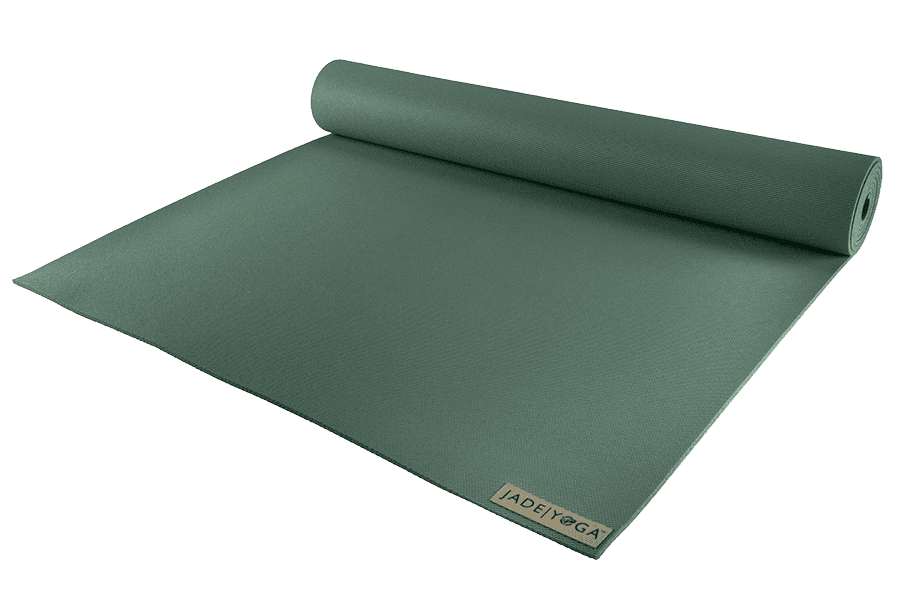
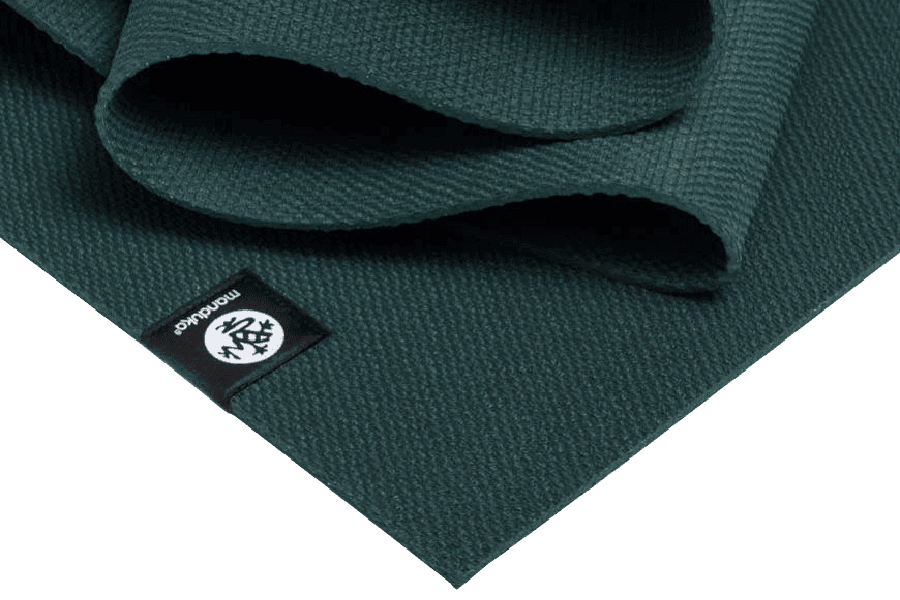
The Fusion is 8 mm of open-cell natural rubber made in the USA, grippy from the first class and the most cushioned mainstream mat you can buy without moving to foam. The X is 5 mm of closed-cell TPE, firm rather than plush, 3.4 pounds against 8, and it wipes or hoses clean with no thought at all.
If the mat stays in one room and your joints are the problem, buy the Fusion. If it also sees strength work, intervals, or a driveway, buy the X and keep the $103.
Get the Jade Fusion if...
- You want 8 mm of cushioning for knees, wrists, or hips
- You practice in a warm room and want rubber tack
- The mat lives in one place
- You want a natural material made in the USA
Get the Manduka X if...
- Your mat sees cross-training, cardio, or outdoor use as well as yoga
- You want a surface that never absorbs sweat and hoses clean
- You want the lighter mat, 3.4 pounds against 8
- You'd rather keep about $103
Side by side
Price
The X lists for about $103 less.
$174.95
List price · check price at Amazon
$72
List price · check price at Amazon
Thickness
The Fusion is 60% thicker.
8 mm0.31″
5 mm0.2″
Weight
The X is 4.3 lbs lighter.
8 lbs3.6 kg
3.7 lbs1.7 kg
Size
The X is 3″ longer; same width.
Same on both
- Both are 24 inches wide
- Neither ships with a carry strap
- Both lie flat without curling
- Neither carries a third-party certification
Full specs
Dimensions
Materials & build
A cushioning specialist against a training mat
The Jade Fusion is $174.95 of 8 mm open-cell natural rubber, made in the USA, and it exists to protect joints. The Manduka X is $72 of closed-cell TPE that Manduka sells as a hybrid fitness mat, built to survive weights, pavement, and a garden hose.
The gap is about $103, which is more than the price of the X itself. Before anything else, decide whether the mat only has to do yoga. If it does, this comparison is mostly about cushioning. If it does not, the X starts looking hard to argue with.
Cushioning: 8 mm against 5
The Fusion is the thickest rubber mat in the mainstream, and OutdoorGearLab’s standalone review scored its comfort a perfect 10, noting that it flattens uneven ground. That review is from 2013 and the Fusion is not in GearLab’s current lineup, so the number is old, but the physics have not moved. Kneeling lunges, long floor sequences, and practices on tile are what the mat is for.
The X’s 5 mm of TPE is firmer than it is deep, tuned for impact absorption rather than plushness because Manduka expects people to jump on it. It is fine on wood, thin on concrete. If your knees are the reason you started shopping, this is the whole decision and the Fusion wins it.
Grip: rubber tack against a dry-hands surface
Jade rubber is tacky the moment you unroll it, with no break-in period. GearLab’s older Fusion review rated it 9 for dry traction and 9 for wet, and open-cell rubber takes on sweat rather than letting it sit on top, which is why Jade mats have the reputation they do in warm rooms.
The X holds well with dry hands and its crosshatch texture is not slick. Sweat is where owner reviews split hard: some report no slipping while dripping, others describe it as very slippery in a heated class and say they bought a towel. Closed-cell TPE is the reason, since a wet patch has nowhere to go until you wipe it. For an unheated practice this rarely comes up. For hot yoga it comes up every class.
Stability: the X is the firmer platform
Thickness is not free. On the Fusion a standing foot presses into the rubber before it finds solid ground, and practitioners who spend their time in standing sequences and single-leg balances often prefer something firmer underfoot.
The X is firm and stays put, which is what a mat needs when the movement includes hopping or a plank on one hand. If your practice is more athletic than restorative, that firmness is a feature rather than a compromise.
Weight: 8 pounds against 3.4
The Fusion is 8 pounds and rolls thick. GearLab scored its portability 3 of 10 and said outright that it is not a mat for someone walking ten blocks to a studio. It is a mat you put in a room.
The X is 3.7 pounds, light for a full-thickness mat and easy to sling over a shoulder. Neither ships with a strap. If the mat leaves the house regularly, this line alone probably settles it.
Size and shape
The X is 71″ × 24″; the Fusion is 68″ × 24″. Same narrow 24 inch width, three inches of length in the X’s favor, which matters if you are close to six feet.
Jade sells the Fusion longer and wider if you need it: a 74″ version and an 80″ × 28″ Fusion XW. Manduka sells the X in one size only, so what you see is the whole line.
Cleaning and what each surface tolerates
The X is the easy one. Closed-cell TPE keeps everything on the surface, so a wipe handles a class, and Manduka pitches it for outdoor workouts on the basis that you can hose it off. Nothing soaks in, so nothing develops a smell.
The Fusion is open-cell, which means it absorbs sweat and oils, and it needs periodic deep cleaning as a result. GearLab scored its ease of care 4 of 10, mostly because a soaked rubber mat takes a long time to dry. Jade’s warranty also excludes harsh cleaners and sun damage, so water and a cloth is the whole approved routine.
Materials and coverage
The Fusion is natural rubber from sustainably farmed trees, manufactured in the USA, and Jade plants a tree per mat sold. It is 99 percent latex free rather than latex free, so it is out if you have an allergy. Jade covers it for one year, excluding sun damage.
The X is high-density TPE built around Manduka’s Double-Weave scrim, made in Taiwan, with no certifications and no warranty beyond a 30 day return window. Manduka’s lifetime guarantee applies to the PRO line, not to everything the brand sells.
Price and where to buy
$174.95 against $72. The X discounts by colorway fairly often, both on Manduka’s site and through the current Manduka X listing at Amazon, where one shade has been running well under the rest.
The Fusion holds its price. Jade lists four colorways, and it is worth comparing the current Jade Fusion price at Amazon with jadeyoga.com before buying.
Bottom line
Buy the Fusion if the mat stays in one room and your joints are the problem you are solving. Nothing else mainstream gives you eight millimeters of grippy rubber, and for restorative work, Pilates, or a practice on a hard floor it is worth the money.
Buy the X if the mat has other jobs: strength work, intervals, a driveway, a hose. It costs $103 less, weighs less than half as much, and needs no care at all. If you want Jade rubber without the eight pounds, the Harmony against the Fusion is the comparison to read next.
Jade Fusion
List price $174.95
Manduka X
List price $72
Frequently Asked Questions
- Can the Manduka X handle hot yoga?
- Owner reviews split sharply. Some report no slipping at all while dripping; others describe it as very slippery in a heated class and say they bought a towel for it. The mechanism is closed-cell TPE: a wet patch stays exactly where it lands until you wipe it, and in a long class that slick spot is where your hands keep going. For an unheated practice it is a non-issue.
- Is 8 mm too much mat?
- It depends on your practice. For restorative work, Pilates, long floor sequences, or a practice on tile or concrete, 8 mm is the point. For standing sequences and single-leg balances, a foot presses into the rubber before it finds ground and some people prefer the firmer platform the X gives. Jade's rubber is dense enough that it never feels like cheap foam.
- Which is easier to look after?
- The X, by a distance. Closed-cell TPE keeps everything on the surface, so a wipe handles a class and a hose handles an outdoor session, and nothing soaks in to develop a smell. The Fusion is open-cell, so it absorbs sweat and oils and needs an occasional deep clean, and it is slow to dry afterwards. GearLab scored the Fusion 4 of 10 for ease of care.
- How long will each one last?
- The X is built for abuse and gives up slowly by compressing, and owners report months of five-day weeks with little visible wear. The Fusion is denser and lasts longer indoors, but natural rubber degrades in sunlight and Jade's one year warranty excludes sun damage and harsh cleaners. Manduka gives the X a 30 day return window and nothing further; the lifetime guarantee covers the PRO line only.
- Is either one good for tall practitioners?
- The X is 71 inches long against the Fusion's 68, so it has a slight edge as sold. Manduka does not offer the X in any other size. Jade sells a 74 inch Fusion at $199.95 and an 80 by 28 inch Fusion XW, so if you need real length the Fusion line has an answer and the X does not.
- Are either of them latex free?
- The X is, since it is TPE. The Fusion is not: Jade describes its mats as 99 percent latex free, which is not the same thing. If you have a latex allergy, the X is the safe choice here.
Related comparisons
- Manduka X vs Gaiam Performance Dry-Grip 5mm
- Manduka X vs Gaiam Performance Dry-Grip Long & Wide
- Manduka X vs IUGA Eco Friendly Non Slip PU
- Manduka X vs JadeYoga Level One
- Manduka X vs Hugger Mugger Earth Elements 5mm
- Manduka X vs 42 Birds The Robin
- Manduka X vs JadeYoga Travel 68"
- Manduka X vs Suga SugaMat
- JadeYoga Harmony 68" vs Manduka X