Jade Fusion vs Manduka eKO Lite: Which One Should You Buy?
Both of these are natural rubber, so the usual rubber-versus-PVC argument does not apply. What separates them is thickness, cell structure, and three pounds. We'll cover what open-cell and closed-cell rubber actually do differently, and which mat suits a practice that travels.
As an Amazon Associate, we earn from qualifying purchases made through links on this page. How this works
The quick answer
The Fusion is 8 mm of open-cell rubber made in the USA: more cushioning, more grip as you sweat, and more maintenance. The eKO Lite is 4 mm of closed-cell rubber made in Taiwan: firmer underfoot, three pounds lighter, three inches longer, and it wipes clean in seconds.
If the mat travels to a studio, buy the eKO Lite. If it stays home and cushioning is the point, buy the Fusion.
Get the Jade Fusion if...
- You want twice the cushioning, 8 mm against 4 mm
- You practice warm and want a surface that absorbs sweat
- The mat stays in one room
- You want rubber made in the USA with a tree planted per mat
Get the Manduka eKO Lite if...
- You carry the mat to class, at 5 pounds against 8
- You want the easier surface to wipe down after a session
- You prefer a firmer platform for standing and balance work
- You'd rather keep about $79
Side by side
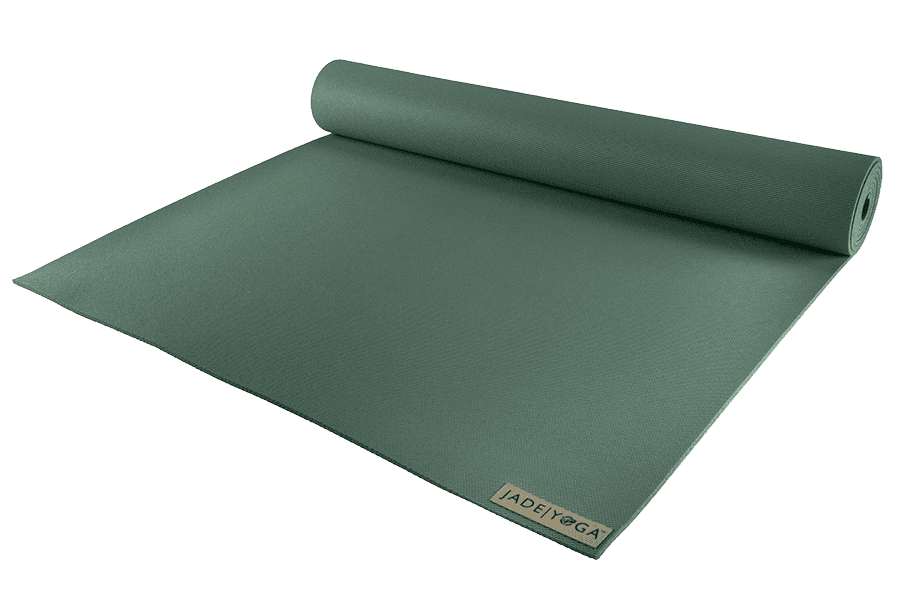
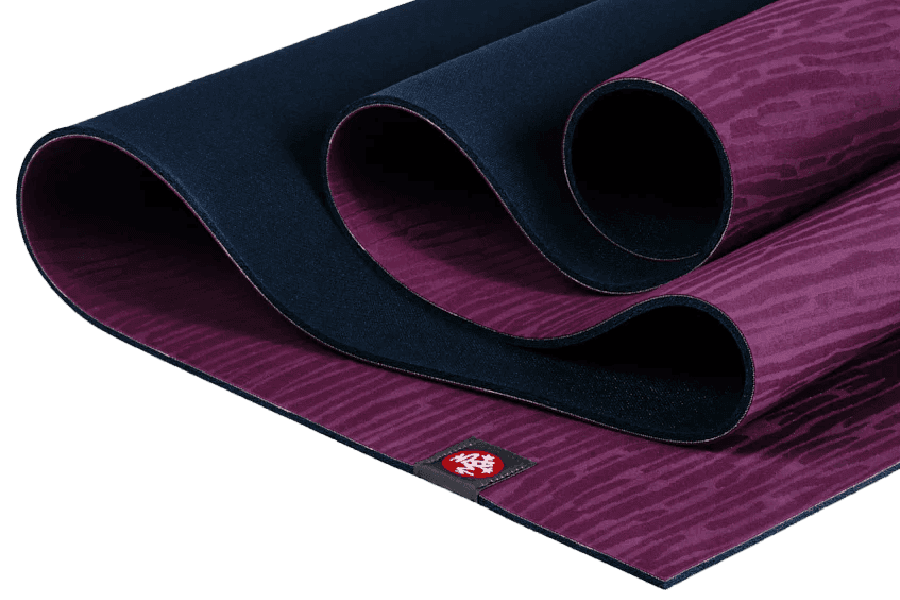
Price
The eKO Lite lists for about $79 less.
$174.95
List price · check price at Amazon
$96
List price · check price at Amazon
Thickness
The Fusion is 100% thicker.
8 mm0.31″
4 mm0.16″
Weight
The eKO Lite is 3 lbs lighter.
8 lbs3.6 kg
5 lbs2.2 kg
Size
The eKO Lite is 3″ longer; same width.
Same on both
- Both are natural rubber
- Both are 24 inches wide
- Both degrade in sunlight and should be stored indoors
- Neither is safe for a latex allergy
Full specs
Dimensions
Materials & build
Same material, twice the thickness
Both of these are natural rubber, so the usual rubber-versus-PVC argument does not apply. The Jade Fusion is $174.95 of 8 mm open-cell rubber made in Pennsylvania. The Manduka eKO Lite is $96 of 4 mm closed-cell rubber made in Taiwan.
Twice the thickness, three pounds of difference, and about $79. What you are really choosing between is a mat that stays in a room and a mat that goes to class.
Open cell against closed cell
This is the difference people miss when they see “natural rubber” on both listings. The Fusion is open-cell, so it drinks sweat into the mat, which is why Jade rubber grips harder as a class goes on and why it needs periodic deep cleaning. The eKO Lite is closed-cell, so sweat stays on the surface and a wipe is the whole cleaning routine.
Neither approach is better in the abstract. Open cell is better for grip in a warm room and worse for maintenance. Closed cell is easier to live with and needs a towel sooner when things get wet. GearLab listed “more slippery when wet” among the downsides of the full-size eKO, which uses the same closed-cell rubber.
Cushioning: 8 mm against 4
The eKO Lite is the thin end of Manduka’s rubber line at 4 mm, chosen deliberately to keep the weight down. It gives you a firm, connected feeling on the floor and not much padding. On wood it is pleasant. On tile, kneeling is not fun.
The Fusion is double that. GearLab’s standalone review scored its comfort a perfect 10 and noted it levels out uneven ground, though that review dates to 2013 and the Fusion has since dropped out of the current lineup. If your reason for shopping is that your knees hurt, the eKO Lite is the wrong end of the range and the Fusion is the right one.
Weight: 8 pounds against 5
Five pounds is not light, but it is carryable. The eKO Lite exists because the full eKO is seven pounds and Manduka wanted a rubber mat people would actually take to a studio.
The Fusion is 8 pounds and rolls thick enough to be awkward under an arm. GearLab scored its portability 3 of 10 and said outright it is not the mat for a ten block walk. Nothing about that has changed since.
Stability: the eKO Lite is firmer underfoot
The trade you make for eight millimeters is that a standing foot sinks a little before it finds ground. Jade’s rubber is dense enough to stay well clear of foam-mat wobble, but people who spend their practice in standing sequences and single-leg balances tend to prefer a firmer platform.
The eKO Lite gives you that firmness. It is thin, dense rubber that answers your foot immediately, which is why it works for a fast vinyasa class even though it does very little for your knees.
Size: three inches to the eKO Lite
The eKO Lite is 71″ × 24″; the Fusion is 68″ × 24″. Same narrow width, three inches of length in Manduka’s favor, which you will feel if you are close to six feet.
Both brands sell longer versions. Manduka has a 79″ eKO Lite Long for $104, and Jade has a 74″ Fusion and an 80″ × 28″ Fusion XW.
Durability and care
Both are natural rubber, so both break down in sunlight and both should be stored rolled and indoors. Jade’s one year warranty excludes sun damage and harsh cleaners specifically. Manduka gives the eKO line a 30 day return window and nothing more; the lifetime guarantee covers the PRO line only.
Day to day the eKO Lite is much less work. Closed cell means a wipe and it is done. The Fusion soaks up what you sweat on it, so it wants an occasional deep clean and it is slow to dry afterwards. GearLab scored its ease of care 4 of 10 for that reason. Both attract dust and lint the way all rubber mats do.
The rubber smell
Both mats arrive smelling like rubber, and the Fusion smells more because there is more of it. It fades over a few weeks of use, and unrolling the mat somewhere ventilated for a few days speeds that up considerably.
Neither is safe for a latex allergy. Jade describes its mats as 99 percent latex free, which is not the same as latex free, and Manduka’s natural rubber carries the same caveat.
Price and where to buy
$174.95 against $96. Manduka discounts eKO Lite colorways regularly on its own site, where one shade has been running near $69, so compare that against the current eKO Lite price at Amazon.
The Fusion holds list price in four colorways. Check the current Jade Fusion price at Amazon against jadeyoga.com before ordering.
Bottom line
Buy the eKO Lite if the mat travels. Five pounds of dense rubber with a surface you can wipe clean in ten seconds is a genuinely good studio companion, and $96 is fair for it. Accept that 4 mm does almost nothing for sore knees.
Buy the Fusion if the mat stays home and cushioning is the point. It grips harder, it is far more comfortable, and it is made in the USA from a renewable material. If you want the middle of this range, the full-size eKO against the Fusion is the next comparison to read.
Jade Fusion
List price $174.95
Frequently Asked Questions
- What's the difference between open-cell and closed-cell rubber?
- Open-cell rubber, like the Fusion's, drinks sweat into the mat, which is why Jade rubber grips harder as a class goes on and why it needs periodic deep cleaning. Closed-cell rubber, like the eKO Lite's, keeps sweat on the surface, so a wipe is the whole routine but you reach for a towel sooner when things get wet. GearLab listed more slippery when wet among the downsides of the full-size eKO, which uses the same closed-cell rubber.
- Is 4 mm enough cushioning?
- On a wood floor, for most people, yes. On tile or concrete, kneeling on 4 mm is not fun. The eKO Lite is deliberately at the thin end of Manduka's rubber line to keep the weight down, and it trades comfort for that. If sore knees are why you are shopping, the Fusion's 8 mm is the mat that addresses it.
- Which grips better?
- The Fusion, in a warm room. GearLab's older standalone review rated it 9 dry and 9 wet, and open-cell rubber keeps working as sweat arrives. The eKO Lite grips well dry with no break-in period, and its closed-cell surface has nowhere to put moisture. For an unheated practice both are good; for a hot one the Fusion is the safer buy.
- Do both mats smell of rubber?
- Yes, and the Fusion smells more because there is more of it. It fades over a few weeks of use, and unrolling the mat somewhere ventilated for a few days speeds that up. Neither is safe for a latex allergy: Jade describes its mats as 99 percent latex free, and Manduka's natural rubber carries the same caveat.
- Which comes in a longer size?
- Both do. Manduka sells a 79 inch eKO Lite Long for $104, and Jade sells a 74 inch Fusion for $199.95 plus an 80 by 28 inch Fusion XW. As sold, the eKO Lite is already three inches longer than the standard Fusion at 71 inches against 68.
- How are they covered?
- Jade offers one year on the Fusion, excluding sun damage and harsh cleaners. Manduka gives the eKO Lite a 30 day return window and nothing further, since the lifetime guarantee covers the PRO line rather than everything Manduka sells. Both mats will outlast their coverage if you store them indoors and rolled.
Related comparisons
- JadeYoga Harmony 68" vs Manduka eKO Lite
- Manduka eKO Lite vs Suga SugaMat
- Manduka eKO Lite vs Lululemon The Mat 3mm
- Manduka eKO Lite vs JadeYoga Harmony 2.0 68"
- JadeYoga Harmony 74" vs Manduka eKO Lite
- Manduka eKO Lite vs Yoga Design Lab Combo 3.5mm
- Manduka eKO Lite vs b, halfmoon B Mat Everyday 4mm
- Manduka eKO Lite vs Yoga Design Lab Infinity 3mm
- Manduka eKO Lite vs Gaiam Performance Dry-Grip Long & Wide